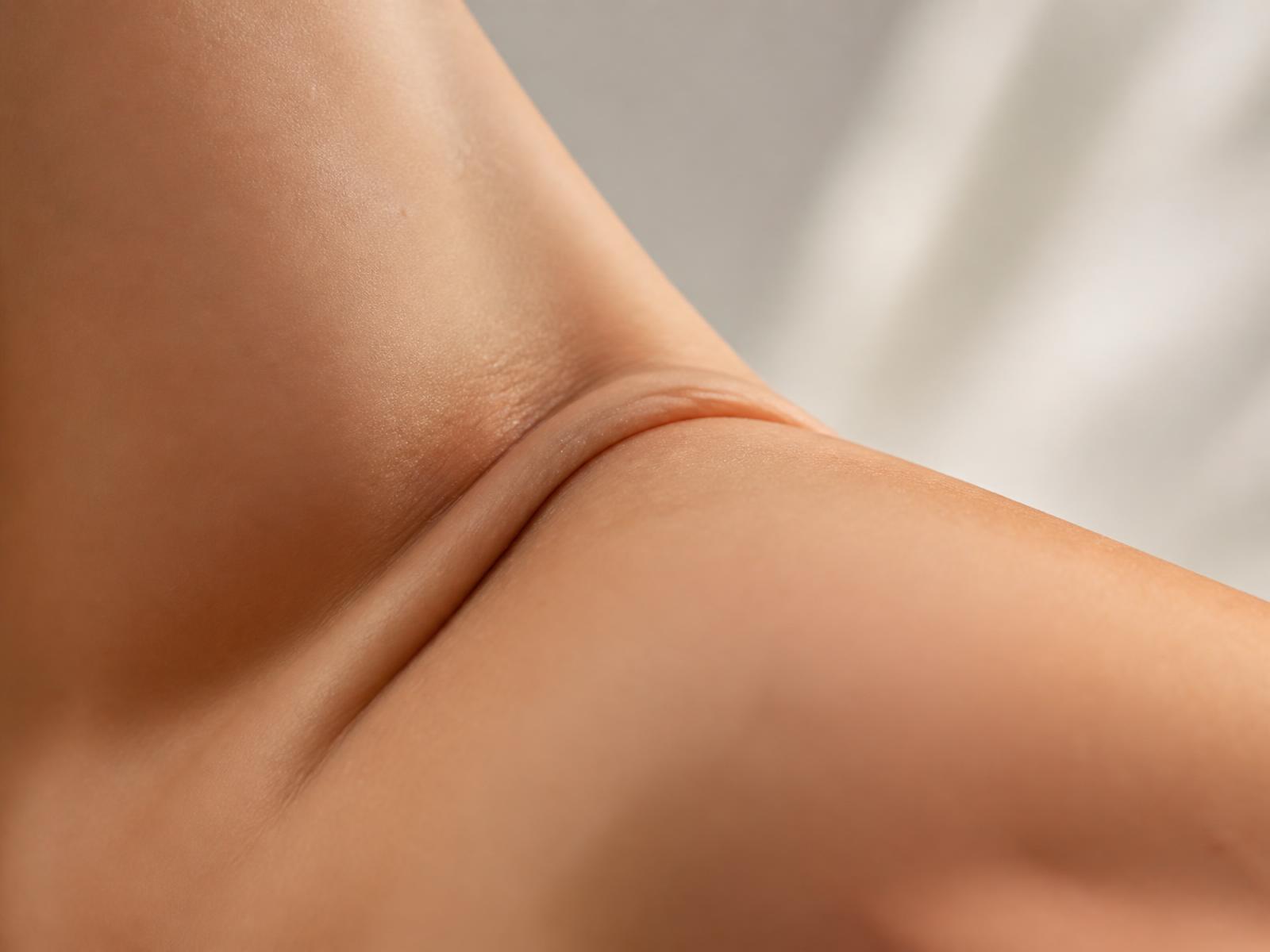
What it is
Skin expands to cover volume, remodelling its collagen and elastin as it goes. When that expansion has been large or long-lasting, elastin can be permanently altered and the skin no longer retracts fully.
The result is drape: skin that folds, hangs or moves independently of the tissue beneath it.
Common causes
- Significant weight loss
- Pregnancy, particularly multiples or repeated pregnancies
- Age-related decline in collagen and elastin
- Cumulative sun exposure
- Genetic differences in connective tissue
The weight-loss relationship
Weight loss is the most common trigger people come to us about. The main predictors are how much was lost, how long the skin was stretched beforehand, and your age while it retracts.
Retraction continues for many months after weight stabilises, which is why assessment during active loss is misleading.
Approaches
- Time at a stable weight — the most underrated step.
- Resistance training to change what sits under the skin.
- A barrier-focused routine for comfort, hydration and texture.
- Daily sun protection to preserve remaining elastin.
- For substantial excess, clinical and surgical options assessed by a qualified provider.
Relevant ingredients
Retinoids and daily sunscreen have the strongest case for supporting long-term skin quality. Ceramides and humectants improve comfort and appearance. Peptides are a reasonable, lower-evidence addition.
None of these remove excess skin, and any product claiming to is overstating what topicals can do.